From Battlefields to Beer Gardens: Why Darts is the Heart of the British Pub
From medieval soldiers to the bright lights of Ally Pally, discover why darts is the ultimate British pub pastime and how it conquered the world.
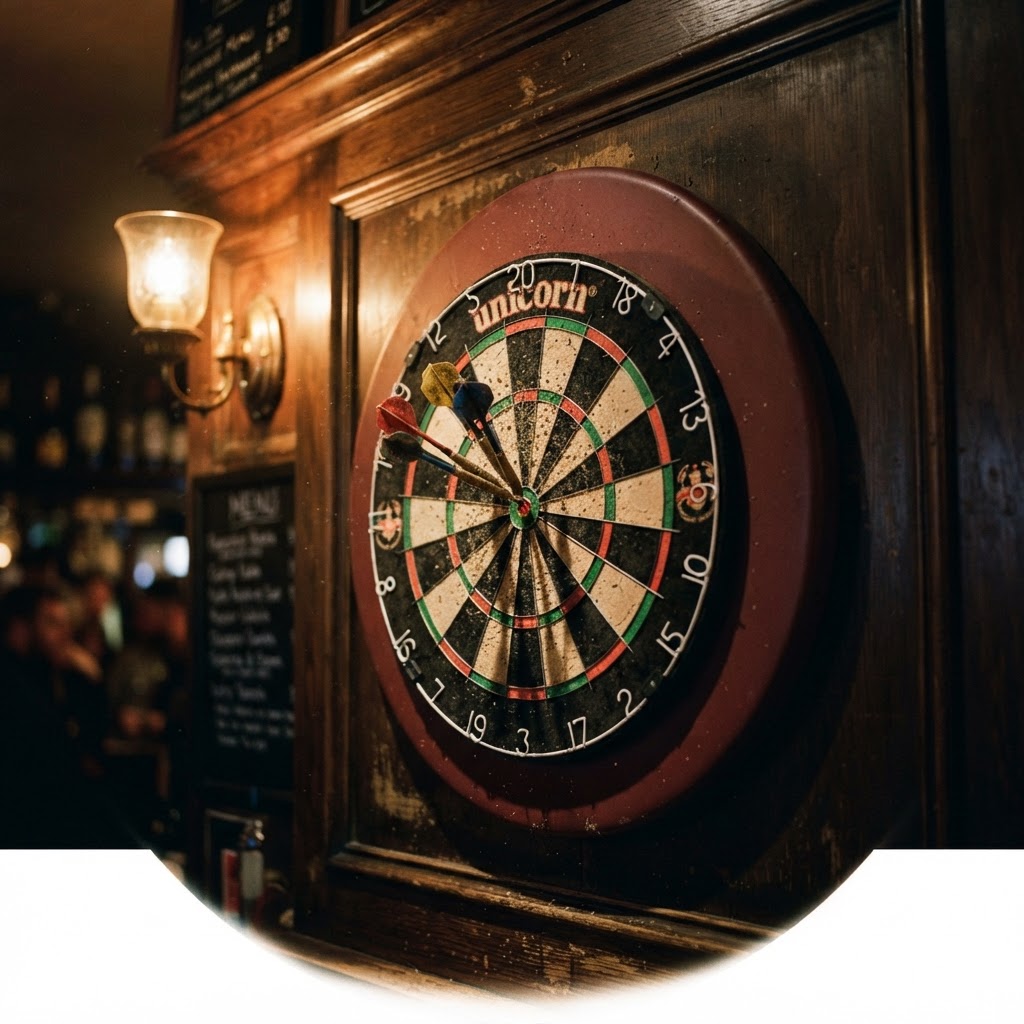
There is a specific sound that defines the British pub experience. It isn’t just the clink of glasses or the hum of a Friday night crowd; it’s the rhythmic thud-thud-thud of three arrows finding their home in a sisal board. Darts is more than just a game to us; it’s a national institution, a test of nerves, and quite possibly the best excuse ever invented to spend an evening with your mates.
But how did we get from throwing bits of wood in the mud to the high-octane, fancy-dress-filled spectacles we see today? Grab a pint, pull up a stool, and let’s look at how the 'arrows' became a British icon.
From Battlefields to Beer Barrels
Believe it or not, the game’s roots are surprisingly gritty. Legend has it that medieval soldiers, bored between battles, started hurling shortened arrows at the upturned ends of wine barrels. When they wanted to get a bit more technical, they switched to using cross-sections of fallen trees.
If you’ve ever wondered why a dartboard looks the way it does, look at a tree. The natural growth rings created the concentric circles, and as the wood dried out, the cracks formed the radial lines that eventually became our modern segments. By the time the 1800s rolled around, the game had moved indoors. The earliest recorded mention of darts in a pub dates back to 1819, and by 1900, the numbering system we use today—with that frustratingly small double one—was standardized.
The Rise of the Local League
While the snooker world has the hallowed halls of the Crucible, darts found its soul in the local. In the early 20th century, darts exploded in popularity across the UK. The National Darts Association was formed in 1924 to bring some order to the chaos, ensuring everyone was playing on the same style of board and, crucially, discouraging the heavy gambling that had previously given the game a bit of a 'reputation.'
This was the era of the pub league. Every town from Cramlington to North Shields developed its own local legends—players who could hit a double top with their eyes shut while balancing a packet of crisps. It became a communal ritual. Whether you were a doctor or a docker, the 'oche' (a word possibly derived from the Old English 'hocken', meaning to spit) was the great equalizer.
The Modern Spectacle: Ally Pally and Beyond
Fast forward to the 1970s and 80s, and darts became a television sensation. We saw the rise of the first true superstars like Eric Bristow and later the undisputed GOAT, Phil 'The Power' Taylor. The game split into the BDO and the PDC, but the heart of the sport never changed—it just got louder.
Today, a trip to 'Ally Pally' (Alexandra Palace) for the World Championships is a bucket-list item. It’s a riot of walk-on music, 180 signs, and enough fancy dress to make a carnival look dull. But even with the millions of pounds in prize money and the global fame of young prodigies like Luke Littler, the essence of darts remains the same as it was in those medieval camps: it’s about precision, pressure, and the perfect throw.
Why We Still Love It
So, why does darts endure? It’s because it’s accessible. You don’t need a designer kit or a gym membership to be good; you just need a steady hand and a bit of practice. It’s a social glue that brings people together, whether you’re playing in a high-stakes league match or just having a casual 'round the clock' with a friend.
There’s nothing quite like the tension of needing a double to finish, the crowd going quiet, and that final, satisfying thwack as the dart hits the mark. It’s a piece of British history you can participate in every single week. So, next time you’re out, why not step up to the oche? Just remember: aim for the treble twenty, but don't be surprised if you end up in the five.
By The Cue & Darts Lounge