Master the Board: The Essential Darts Checkouts Every Player Needs to Know
Stop scratching your head at the oche! Master these essential darts checkouts to win more legs and impress your mates at the local pub league.
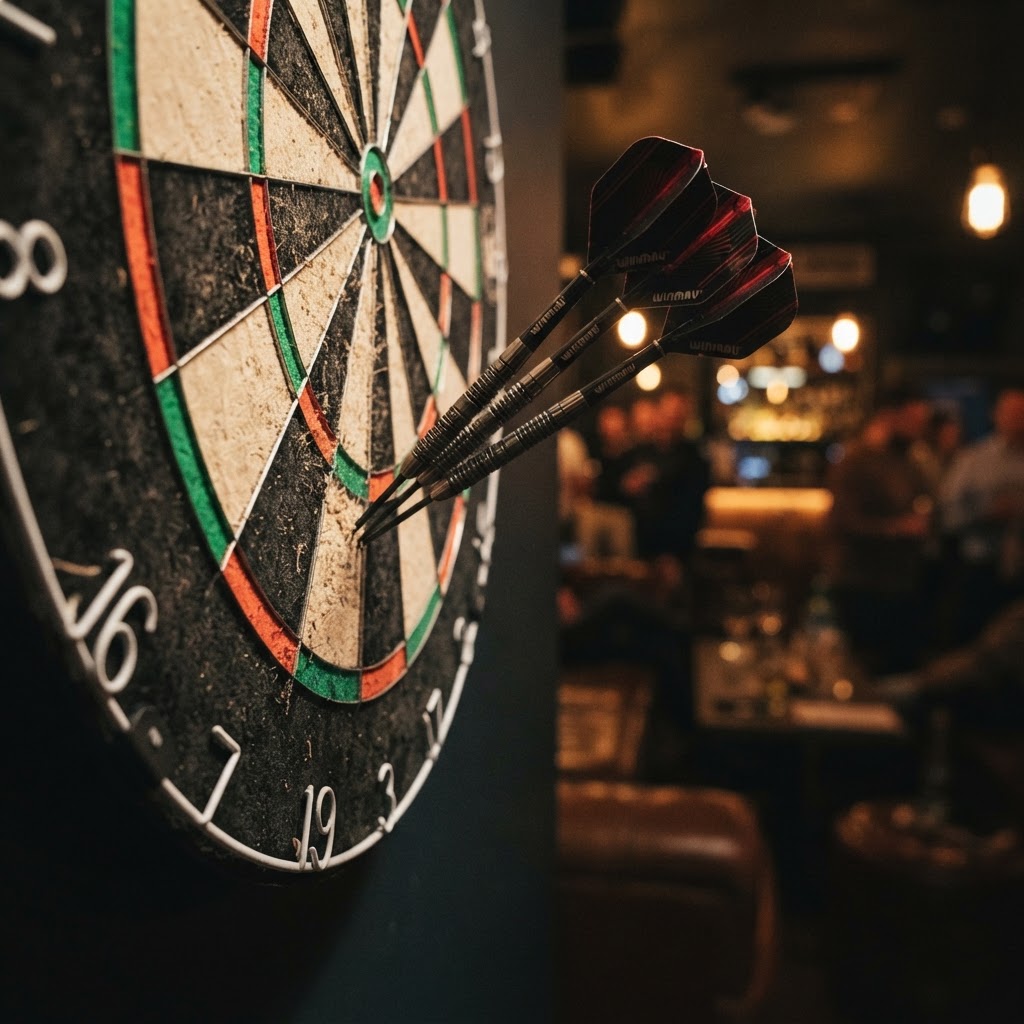
We’ve all been there. You’ve found your rhythm, the scoring is heavy, and you’ve just peppered the treble 20 to leave yourself on a finish. But then, the mental maths kicks in. You freeze, your rhythm breaks, and suddenly that ‘easy’ double looks like a postage stamp from across the room.
As the legendary Bobby George always says, "trebles for show, doubles for dough." You can hit 180s until the cows come home, but if you can’t close out the leg, you’re just making the board look pretty for your opponent. Whether you’re playing a casual game in Cramlington or competing in a North Shields pub league, memorising your checkouts is the fastest way to level up your game. Here are the essential combinations every player should have burned into their brain.
The "Bread and Butter" Doubles
If you watch the pros at Ally Pally, you’ll notice they have favourite landing spots. For most, the holy grail is Double 16 (32). Why? Because it’s the most forgiving number on the board. If you aim for Double 16 and accidentally hit a single 16, you’re left with 16—which is Double 8. Miss that into the single? You’ve got Double 4. It’s the gift that keeps on giving.
You should also memorise the "Even Powerhouse" route: 40 (Double 20), 32 (Double 16), 24 (Double 12), and 16 (Double 8). These are the foundations of winning darts. If you can leave yourself one of these, you’re giving yourself multiple bites at the cherry without having to shift your focus across the board.
The Two-Dart Ton and Setup Shots
When you’re sitting on a score like 100, don’t overthink it. The standard route is Treble 20, Double 20. It’s clean, efficient, and keeps you on the most familiar part of the board. However, the real skill comes in knowing how to handle the "setup" numbers.
Take 80, for example. Many beginners instinctively go for Treble 20 to leave Double 10. But if you hit a single 20, you’re left with 60—a much trickier two-dart finish. A seasoned player might look at 80 and think Treble 16, Double 16. If you hit the single 16, you’re left with 64, which is a manageable Treble 16, Double 8 or Single 14, Bullseye. Learning these "percentage plays" is what separates the casual throwers from the local legends.
The Big Fish and Champagne Finishes
We can’t talk about checkouts without mentioning the 170—the "Big Fish." It’s the highest possible checkout in the game: Treble 20, Treble 20, Bullseye. While you might not be reeling this in every Friday night, knowing the route is essential for that moment the crowd goes quiet and the pressure is on.
Then there’s the "Shanghai" (120). This is a classic UK pub favourite: Single 20, Treble 20, Double 20. It’s pure theatre when it lands. Memorising these high-end finishes isn't just about the maths; it’s about the confidence. When you know exactly where your next two darts are going before the first one has even left your hand, your accuracy skyrockets.
Avoiding the Bogey Numbers
Finally, part of mastering checkouts is knowing what not to leave yourself. In the darts world, we call these "bogey numbers." You cannot finish 169, 168, 166, 165, 163, 162, or 159 in three darts. There is nothing more frustrating than hitting a massive score only to realise you’ve left yourself on 169, effectively handing the turn back to your opponent. Always keep an eye on your subtraction to ensure you’re landing on a finishable number.
Next time you’re down at the lounge with a pint and a set of tungsten, try focusing on these routes instead of just aiming for the red bit at the top. Practice these combinations until they become second nature, and you’ll find yourself shaking hands as the winner far more often. See you at the oche!
By The Cue & Darts Lounge