From 20 to 50: The Club Player’s Guide to Building Big Snooker Breaks
Stuck in the 20s? Learn how to think like a pro and turn those single pots into frame-winning breaks with our guide to snooker break building.
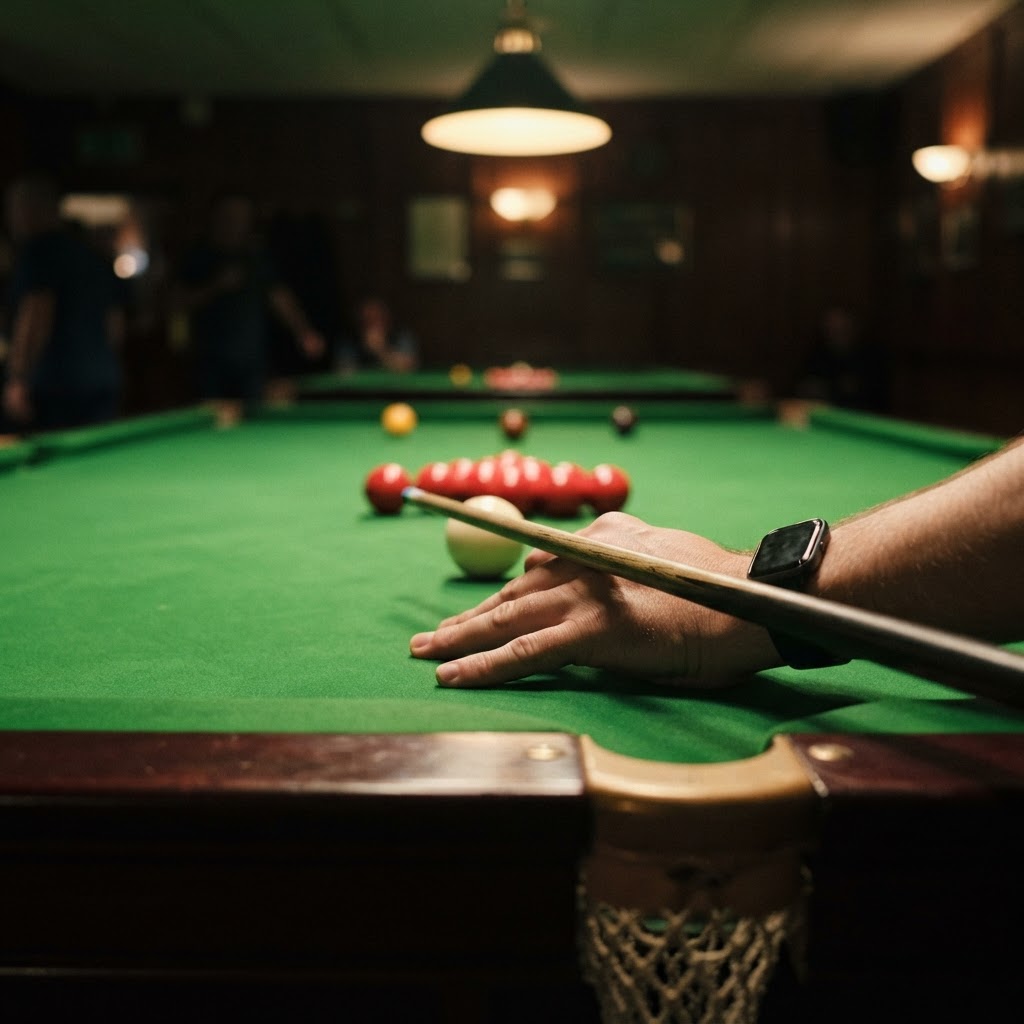
We’ve all been there. You’ve just slotted a worldie of a long red, the kind that would make Ronnie O’Sullivan nod in approval, only to realize you’re stuck behind the green with nowhere to go. It’s the classic club player’s curse: great potting, but the cue ball has a mind of its own. Building a big break isn’t just about being a ‘potting machine’; it’s about the art of navigation. Whether you’re playing a casual frame in Cramlington or competing in a local North Shields league, moving from a scrappy 15 to a fluent 50 requires a shift in how you see the table.
Stop Potting, Start Planning
The biggest mistake most club players make is focusing entirely on the ball they are currently hitting. To build a break, you need to think in ‘pairs’—red, color, and the next red. Before you even chalk your cue for the first pot, you should know exactly where the white needs to land to make the next shot easy. As the pros at the Crucible often say, the best players make the game look boring because they never have to play a difficult shot.
Try to avoid ‘recovery shots’ where you’re forced to thin a ball into the corner just to stay at the table. Instead, focus on ‘natural’ position. Use the natural angles of the table to let the cue ball drift into open spaces. If you have to use three cushions and a load of side spin to get on the black, you’ve probably played the wrong red. Keep it simple, keep it central, and keep the white moving in short, controlled bursts.
The Engine Room: Working the Black and Pink
If you want to rack up the points, you need to get comfortable around the ‘engine room’—the area between the blue and the black spot. This is where the big breaks are born. A common tip for intermediate players is to leave an angle on the black. If you land straight on the black, you’re stuck; you can’t easily get back up for the next red. By leaving a slight angle, you can use a ‘stun’ shot to flick the white back into the pack or toward a loose red.
Don’t be afraid to use the pink, either. While the black is the big scorer, the pink is often more accessible and allows for better control when the reds are clustered. Early in the break, focus on clearing the ‘loose’ reds—the ones that aren’t touching any others. Once you’ve built a bit of rhythm and confidence, that’s the time to look for a controlled nudge to split the main pack.
The Mental Game and Pre-Shot Routine
Snooker is as much about what’s happening between your ears as what’s happening on the baize. When you’re on a break, it’s easy to get rushed or excited as the score climbs. This is when the ‘easy’ misses happen. Watch the top players at the UK Championship; they have a ritual. They stand behind the shot, visualize the line, walk into the stance, and deliver the cue smoothly.
If you feel the pressure building, take a second to re-chalk. It’s not just about the grip on the ball; it’s a mental reset. Whether you’re at our Towcester venue or your local haunt, maintaining that same rhythm for every shot—whether it’s the first red or the frame-ball pink—is the secret to consistency.
Building big breaks is a journey, not a sprint. Next time you’re at the table, don’t just aim for the pocket; aim for the position. With a bit of patience and a lot of practice, those 20s will turn into 50s before you know it. See you at the table!
By The Cue & Darts Lounge